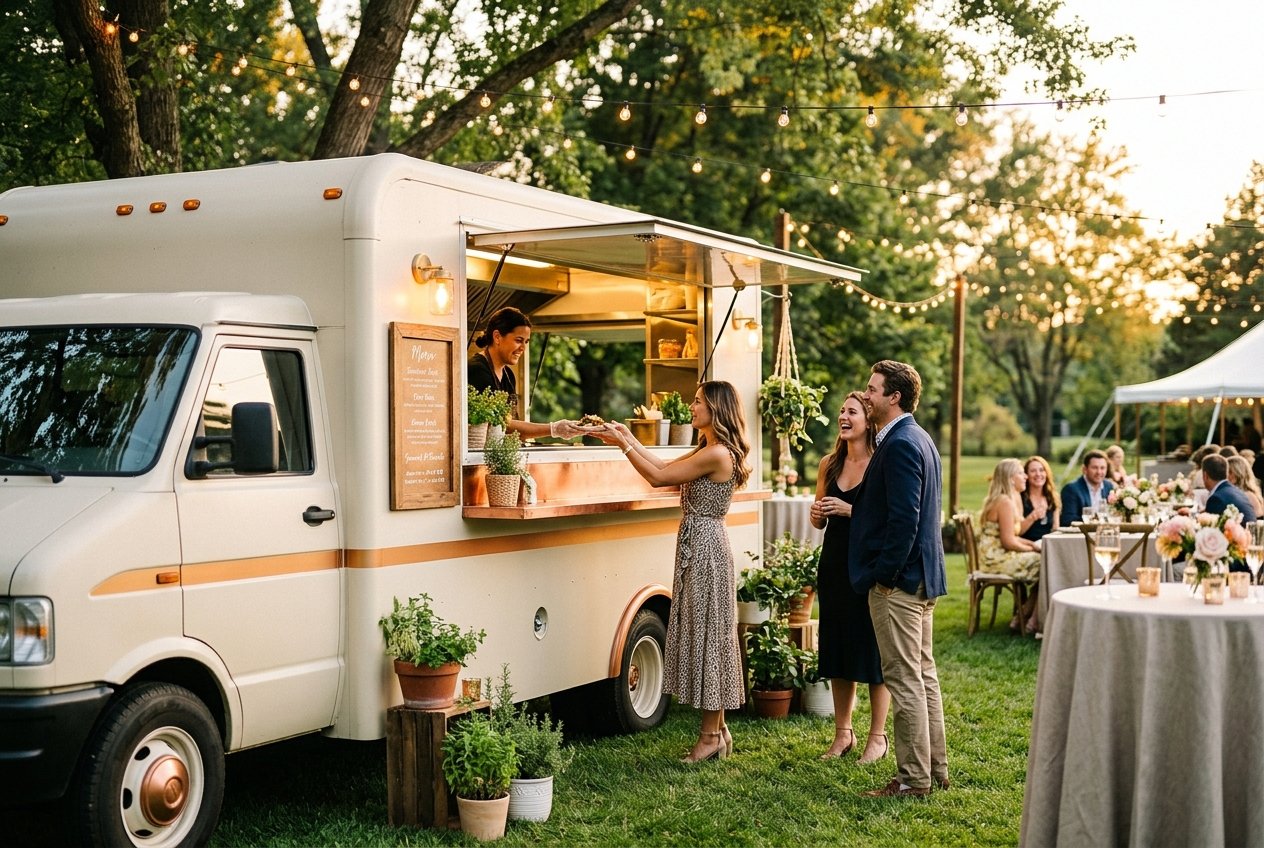
Food trucks can turn an ordinary event into something people actually talk about afterward. They bring the kitchen to your guests, offer a more casual and interactive experience than traditional catering, and can work for everything from a company lunch to a wedding or community festival.
But hiring a food truck is a little different from ordering trays of food from a restaurant. You need to think about guest count, service time, menu, parking space, payment arrangements, utilities, and whether one truck can realistically serve everyone.
This guide walks through the process so you can book the right food truck — or trucks — without turning event day into a parking-lot panic.
What Types of Events Can Hire a Food Truck?
Food trucks can work for far more than festivals. Depending on the truck and local requirements, they may be a fit for:
- Corporate lunches and employee appreciation events
- Apartment and HOA community nights
- School events and fundraisers
- Weddings and rehearsal dinners
- Graduation and birthday parties
- Breweries, wineries and taprooms
- Church and nonprofit events
- Car shows, concerts and community festivals
- Sports tournaments and youth events
- Private parties and neighborhood gatherings
The best fit depends on the event, the number of guests, how long food service will last, and what kind of experience you want to create.
How Far in Advance Should You Book a Food Truck?
For a small weekday event, you may be able to find a truck with only a few weeks of notice. For popular Fridays, Saturdays, weddings, large festivals, and peak spring-through-fall dates, earlier is better.
A good rule is to start contacting food trucks as soon as your date, location and approximate guest count are reasonably firm. Established trucks can book desirable dates months in advance.
If your event is only a few weeks away, don't assume you're out of luck. Cancellations and schedule openings happen. Just be prepared to be flexible about cuisine or service time.
What Information Does a Food Truck Need?
You'll get better responses — and faster answers — if your request includes the information a truck owner needs to decide whether the event makes sense.
Include:
- Event date
- Exact location or city
- Requested serving time
- Estimated number of guests
- Whether the event is public or private
- How guests will pay
- Whether other food trucks or food vendors will be present
- Any expected minimum sales or guaranteed payment
- Available parking and setup space
- Any special menu, dietary or service requirements
A message that simply says, “Are you available Saturday?” creates several rounds of questions before a truck can even evaluate the opportunity.
How Much Does It Cost to Hire a Food Truck?
There isn't one universal food truck rental price. The cost depends heavily on how the event is structured.
Common arrangements include:
Guests Pay Individually
The truck operates much like it would at a normal public stop, and each guest purchases their own food. Some trucks may require a minimum expected turnout or minimum sales guarantee before accepting this type of event.
Host-Paid Catering
The event organizer pays for the meals. Pricing may be based on a guaranteed guest count, selected menu, per-person rate, minimum spend, service fee, or a combination of those.
Vouchers or Meal Tickets
The host provides guests with a voucher or meal ticket, and the truck tracks the meals redeemed. This can work well for employee events and larger gatherings where the organizer wants to cover a defined amount.
Minimum Guarantee
For events where guests purchase their own meals, a truck may require a guaranteed minimum. If sales fall below that amount, the organizer pays the difference. This protects the truck from committing several hours of staff, travel and prep to an event that produces very little business.
When comparing food truck catering costs, don't look only at menu prices. Ask what is included, whether there is a minimum, whether tax or service fees apply, and what happens if the final guest count changes.
How Many Food Trucks Do You Need?
This is one of the most important questions for a larger event — and there isn't a magic guest-count formula that works for every truck.
A truck's serving capacity depends on its menu and operation. A truck selling a few fast-moving items may serve guests much faster than one preparing highly customized meals to order.
Consider:
- Total expected attendance
- How many attendees are actually expected to eat
- Length of the serving window
- Menu complexity
- Average ticket/service time
- Whether everyone will try to eat at once
- Whether other food options are available
For a large event, ask prospective trucks how many meals they can comfortably produce during your serving window. The truck operator knows their kitchen better than any generic online formula.
What Should You Ask Before Booking?
Before confirming a truck, make sure both sides understand the basics.
- Are you licensed and insured for this type of event?
- What space do you need to park and operate?
- Do you need access to electricity or water?
- How early will you arrive for setup?
- What menu will you serve?
- Can the menu accommodate common dietary needs?
- What is your minimum or pricing structure?
- What payment methods do you accept?
- What is your cancellation or weather policy?
- How many guests can you reasonably serve during our service window?
For larger events, it is also smart to discuss where lines will form, how trucks will enter and exit the property, and whether generators are permitted.
Make Sure There Is Enough Space
Food trucks need more room than the vehicle itself.
Depending on the setup, a truck or trailer may need space for a tow vehicle, generator, propane equipment, service windows, customer lines, awnings and safe clearance around cooking equipment.
Avoid placing a truck where its customer line will block traffic, emergency access, building entrances or other vendors. If the event is on grass or another soft surface, talk with the truck operator first — especially if rain is possible.
Don't Forget About Power, Water and Restrooms
Many food trucks are self-contained, but never assume.
Some trucks operate entirely from onboard generators and water tanks. Others may request electrical service or another accommodation. The organizer should also confirm restroom availability for vendors when appropriate.
Ask these questions before event day rather than discovering at setup that the nearest usable outlet is 300 feet away.
Have a Weather Plan
Rain, high winds, extreme heat, snow and severe weather can affect outdoor food truck events.
Discuss the cancellation policy in advance. For a public event, consider how you will communicate a weather cancellation or schedule change to attendees and vendors.
A clear plan protects both the organizer and the food truck from last-minute confusion.
Food Truck Catering vs. Traditional Catering
Neither option is automatically better. They're different experiences.
Traditional catering can be ideal when everyone needs to eat at nearly the same moment or when the event calls for formal plated or buffet service.
Food trucks shine when you want food prepared on site, guests choosing their own meals, an outdoor or casual atmosphere, and the truck itself becoming part of the event.
For some larger events, the best solution is multiple food trucks with different cuisines. That gives guests variety while spreading demand across several kitchens.
How to Find Food Trucks for Your Event
Traditionally, booking food trucks meant searching social media, finding individual websites, sending messages one at a time, and waiting to learn who was available.
TruckTrackr's Request a Truck feature is designed to make that easier.
Event organizers can provide the important details about their event and give participating food trucks an opportunity to evaluate the booking. Instead of starting from scratch with individual searches, you can put the opportunity in front of food truck operators who may be interested.
| NEED A FOOD TRUCK FOR YOUR EVENT? Use TruckTrackr's Request a Truck feature to share your event details with participating food trucks. thetrucktrackr.com |
A Better Food Truck Event Starts With Better Information
The easiest food truck bookings happen when the organizer and truck owner both know what to expect.
Have your date, location, guest count, serving window and payment plan ready. Give the truck enough information to determine whether it is a good fit. And for larger events, think about service capacity and logistics — not just how many different cuisines you want.
Do that, and hiring a food truck can be one of the simplest — and most memorable — parts of planning your event.
Ready to get started? Request a food truck through TruckTrackr and let the food come to you.